
Beyond Equal: What Women Are Really Bringing To The Data Centre Commissioning Industry
This International Women’s Day Global Commissioning explore the real impact of having more women in the industry.
We are all guilty.
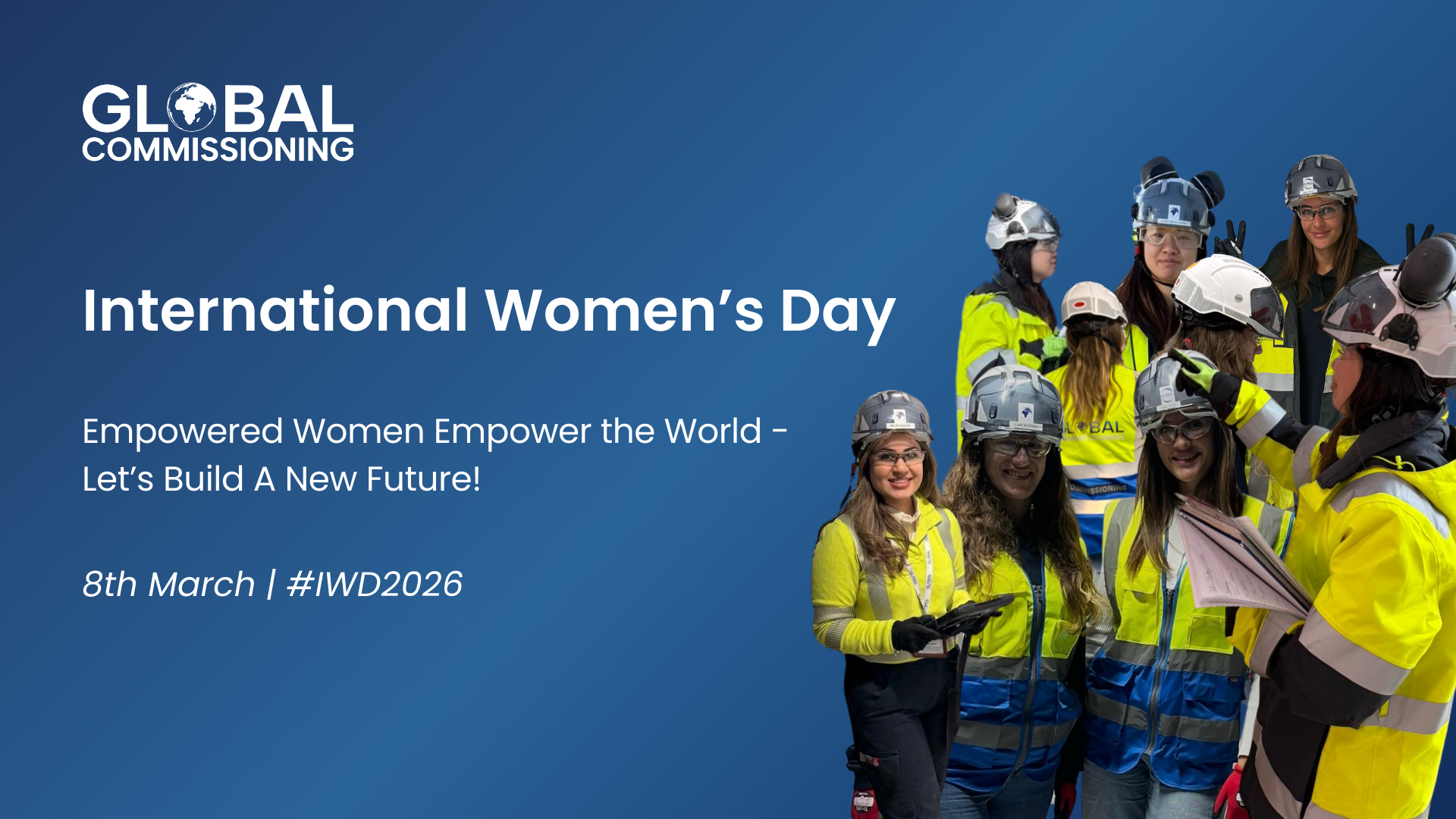
Every year, International Women's Day follows the same script. We talk about lack of representation, low percentages, how far there is still to go. All of it important. But none of it quite enough.
This year, we wanted to ask a different question.
In the past few weeks, we sat down with seven women across Global Commissioning. Two Commissioning Managers, a Commissioning Engineer, a Group CFO, a Director of Project Support & Software, a Financial Controller and a Head of Resourcing.
All different ages and nationalities, a mix of on-site and in-office roles. Some new in their positions, some having been here since the start. The interviews were separate - none of them spoke to each other, none of them were briefed.
And yet, despite the different roles, languages, nationalities, locations and ages, the same themes came through.
Not equality. Not a seat at the table. Something more interesting than that.
The data centre industry is facing a well-documented skills crisis, and the conversation about solving it tends to go the same way: we need more people. But hiring women - or anyone - into a structure not built for them isn't a solution. It sets people up to fail and changes nothing. The real question isn't just who we hire. It's what we're actually gaining when we build environments where different people, with different perspectives, can genuinely thrive.
What came back from those seven conversations was not what we expected. It was better.

They didn't plan to be here. That's the point.
Almost none of the women we spoke to had a straight line into this industry. Maria Baba, our Financial Controller, studied engineering at university before building a two-decade career in finance. Melika Azhdari, one of our Commissioning Managers currently based in Italy, grew up obsessed with aeroplanes and studied aerospace engineering - only to discover commissioning through a switchgear internship in Ireland when aviation roles didn't materialise. Kelly Strong, our Head of Resourcing, spent years placing technology talent across the Netherlands and the UK before finding her way to Global. Emily Fox, our Director of Project Support and Software, joined straight from school, after originally aspiring to be a nurse.
The variety of routes matters. These women arrived with different training, different instincts, different frames of reference - and that difference is precisely what they contribute.
Maria put it plainly. When she first heard about the role at Global, she didn't hesitate.
"I said to them: just make me an offer. As soon as I found out what the business was about and how we support data centres, I wanted to become part of this industry - whatever the opportunity was at that point."
She joined as Finance Manager and was promoted to Financial Controller within months. Chantelle Berry, our Group CFO, makes the broader point: "Graduate schemes don't necessarily have to only target people from engineering backgrounds. If someone has studied something different but they have the passion and the hunger to learn, that is worth its weight in gold."
The industry already knows it needs to cast a wider net for talent. Only now is it becoming apparent what is to be gained from a broader talent pool.
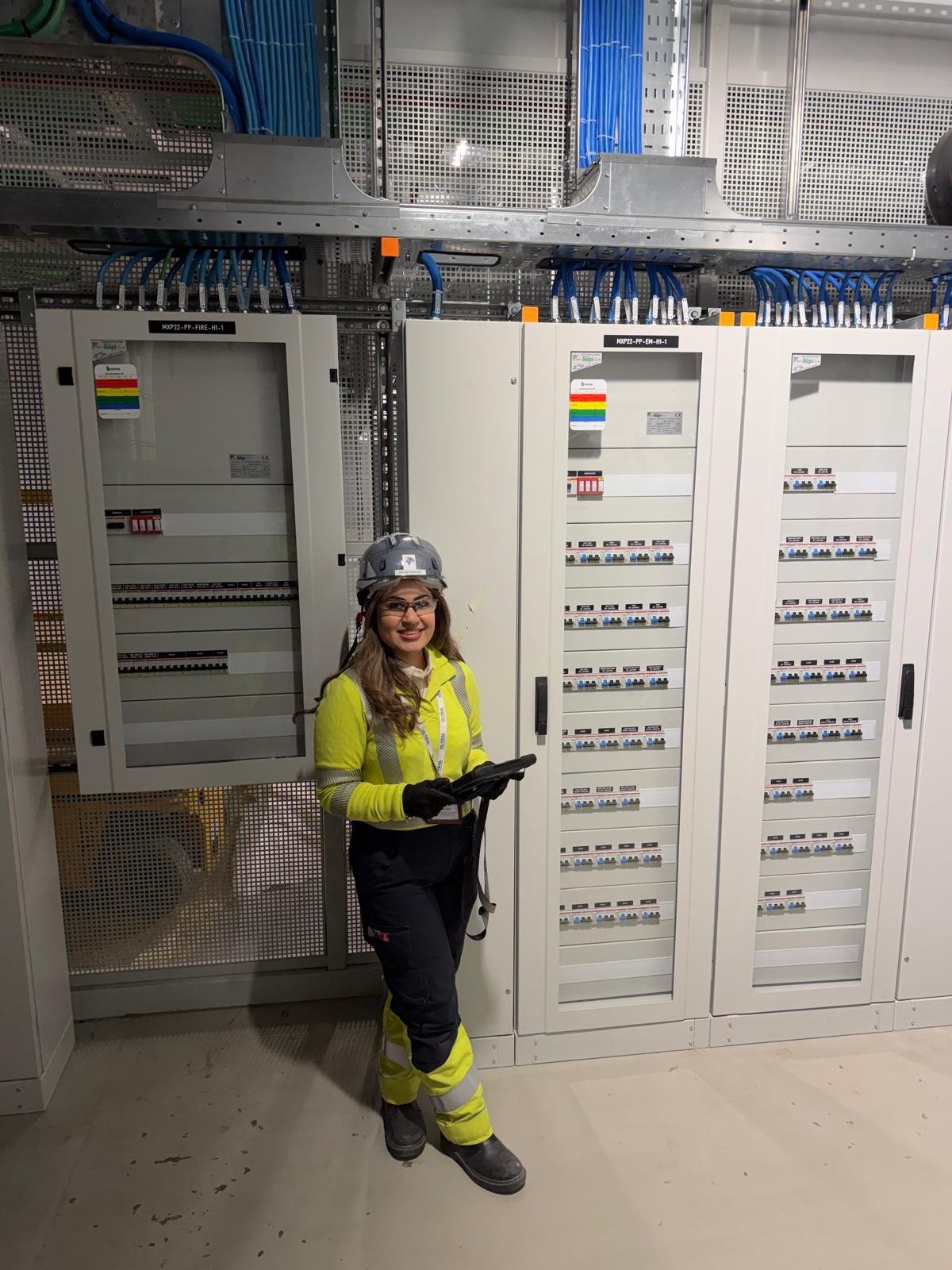
Same role. Different edge.
Men and women can hold the same position, deliver to the same standard, and be equally excellent at the technical demands of the job. That is not in question. What these conversations surfaced is something subtler - a consistent set of instincts and approaches that add something the industry has historically undervalued.
Maria describes herself as a reformer. "In whatever I look at, I'm always asking: is there a better way? Is this the most efficient approach? I don't think I'll ever be any different, wherever I go and whatever I'm doing - I'll be shaping it, improving it, making it better. If there's a way to do that, I will find it."
Aleksandra Wojciechowska, our Commissioning Engineer currently working on an 80 megawatt project in Belgium - four times the scale of her previous project - names attention to detail and curiosity as the qualities that have driven her most.
"With commissioning there is always something new, always another way of doing things. You can never be bored because there is always so much information to take in and always an opportunity to do something you haven't done before."
Melika speaks with a clarity that only comes from experience. Coming from an aerospace engineering background, she describes commissioning as the point where design meets reality, where the technical knowledge she built in a completely different industry suddenly had a new and more urgent application. "This industry is very fast-paced with such little room for error - it keeps you on your toes constantly. But that's also what makes it exciting, because you're always problem solving. And I think problem solving is one of the key things in engineering."
Five months in, she was trusted to run an L4 chiller test, one of the most technically demanding commissioning activities on site. "To be able to do that after five months, and to have that trust from the people around me - that was one of the biggest things for me." The competence was never in doubt. What mattered was being given the room to demonstrate it.
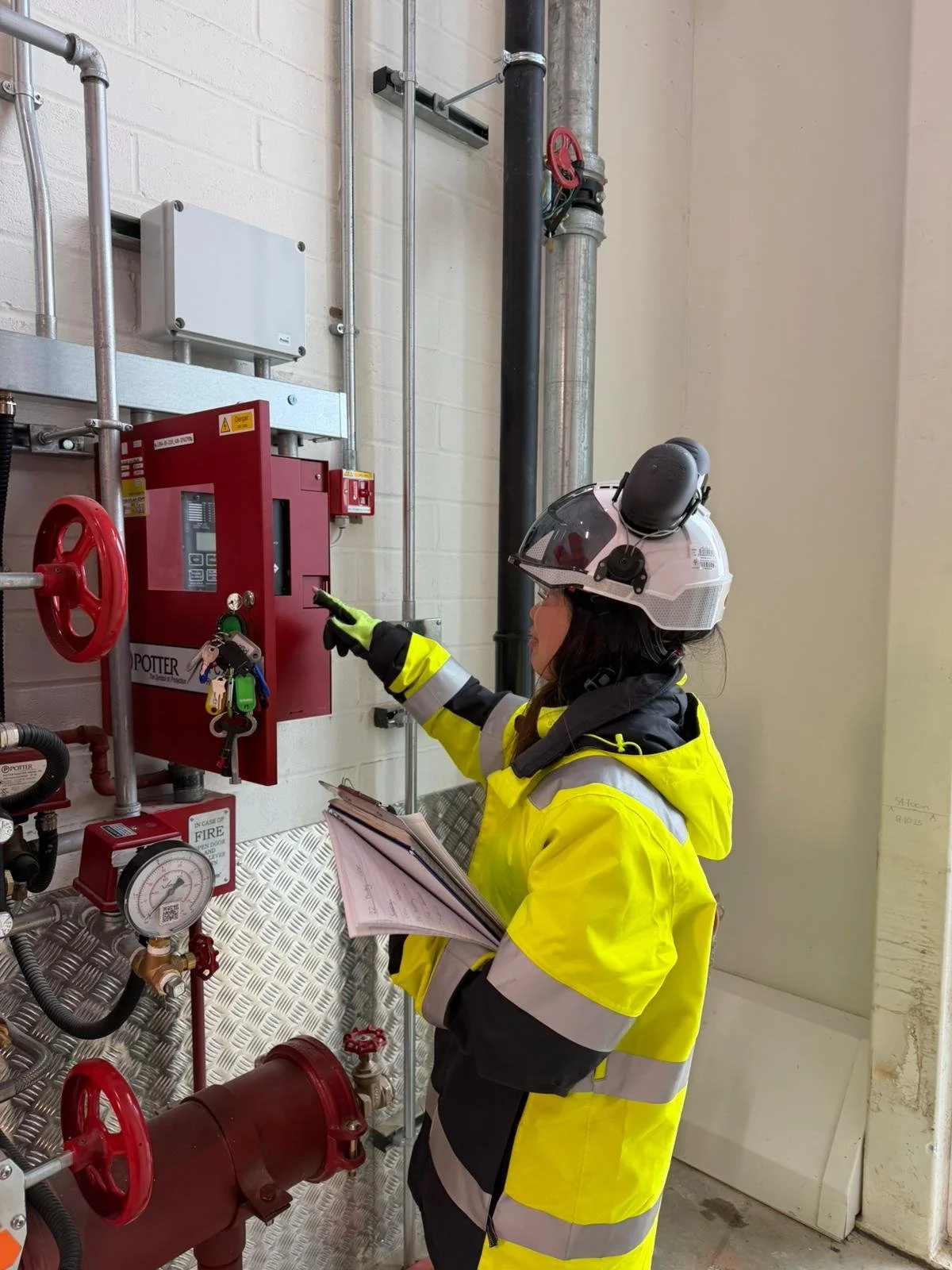
The room nobody was running
Ask anyone on a commissioning site what the hardest part of the job is, and the answer is rarely technical. It's the room. The contractor who won't move. The vendor who's behind schedule. The client who needs answers in real time. The skill of commissioning is getting all of those people - who have often never met, who come from different companies and different cultures, each with competing priorities - moving in the same direction, working to the same deadlines.
Sandy Chow, our Commissioning Manager currently working on a major project in London, started her career in Hong Kong working in plant rooms for large-scale buildings and smart city developments. She joined Global bringing five years of Asia-based data centre experience. The way she describes the job gets at something that doesn't appear in any job description.
"As a Commissioning Manager you sometimes have to stand up in a room full of different contractors and vendors you've never met before and align everyone towards the same goal in a very short space of time, because the system has to work. Everyone comes from a different background, with a different personality, but we share the same goal. I see commissioning as fundamentally collaborative - it involves vendors, contractors, clients, designers and facilities teams all together. We share open communication and we build trust throughout the entire project."
And when everything finally aligns?
"When everything aligns and everyone agrees on moving towards the same goal, it really does feel like you've made music. It’s like running an orchestra."
That instinct, for reading a room, building trust under pressure, conducting the orchestra, came through unprompted, across roles that have nothing technically in common. Sandy on site in London. Chantelle in the boardroom. Kelly across hundreds of hiring conversations. Different contexts. Same skill.
Kelly frames it this way: "I think women bring a different edge. A bit more empathy, perhaps, we see things differently. Instead of saying 'no, that's wrong,' try bringing your perspective to the table calmly: 'this is what I think and here's why.' It means you're heard rather than dismissed."
That's not weakness. That's precision and confidence.
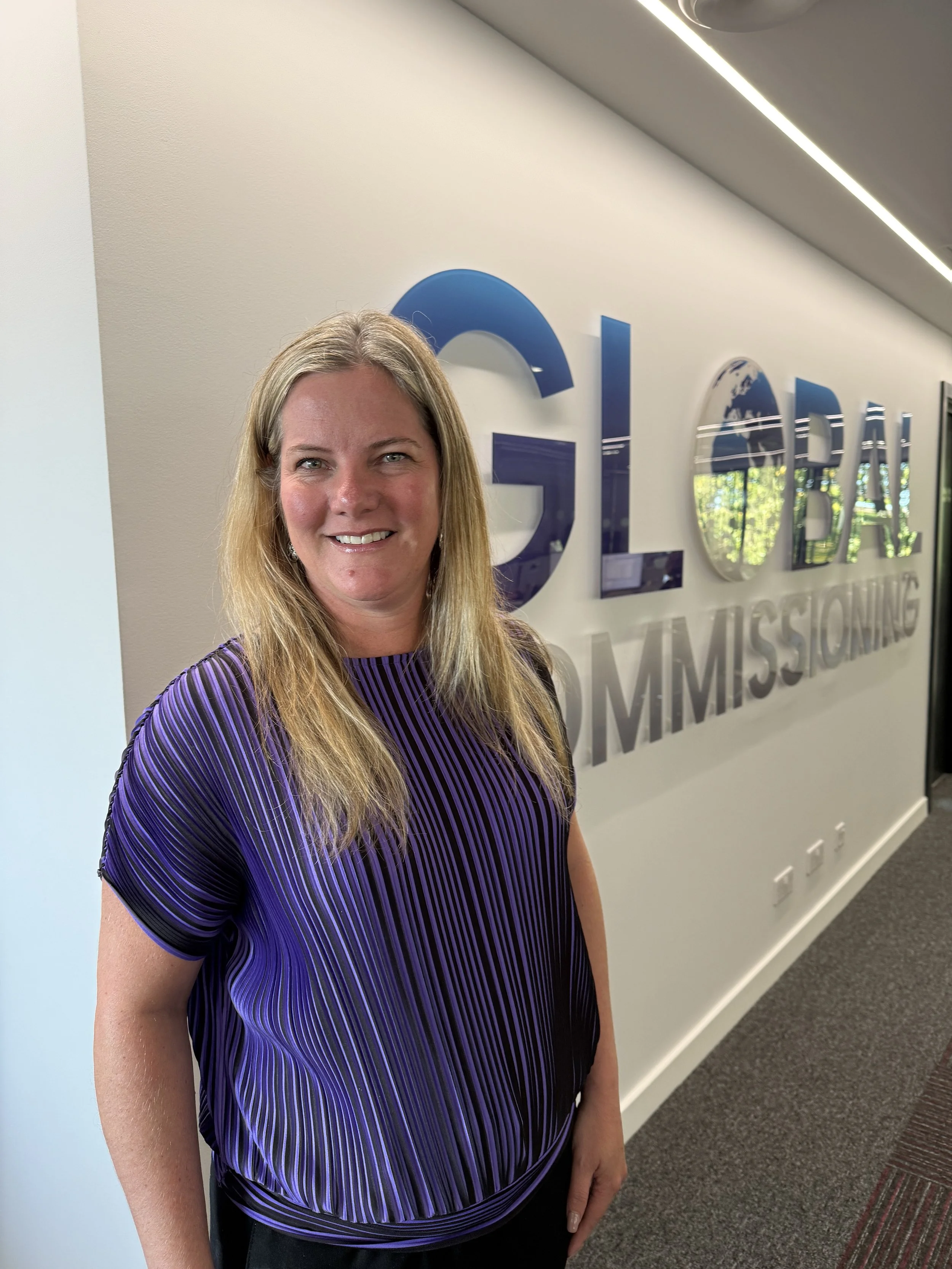
Build the environment first
Hiring women into a structure not built for them doesn't create diversity. It creates churn. What came through in these conversations, as clearly as any technical insight, is that the environment matters as much as the opportunity.
Chantelle, who spent years in boardrooms where she had to fight simply to be heard, is unambiguous about what changed when she joined Global.
"They don't see me as a woman - they see me as part of the team. That is completely different to anything I've experienced at previous organisations."
Aleksandra, two months into her role says the same thing from a site. Her Manager creates space for her ideas, backs her when she takes something on, and is there alongside her when she needs support. "After just two months I already feel that, and it means a great deal."
Maria speaks to what that kind of environment produces over time: "I think we all need a little push sometimes. But giving people the opportunities, and making the most of those opportunities with an open mind, is what takes every business and every department further."
Chantelle makes the operational case simply: "We need to trust our people. Set clear guidelines about what's expected, track delivery, and give individuals the space to do their best work. That's how you get the best out of anyone - regardless of gender."
This isn't a policy. It's a culture. And culture isn't built top-down; it's built daily, by the people already in the room.
Not equal. Complementary.
None of the women we spoke to are saying women are better. None of them are asking for special treatment. What they are saying - consistently, independently, without any shared script - is that diverse teams think differently. That different nationalities, backgrounds and genders bring different perspectives to the same problem. And that the commissioning industry, which prides itself on precision and problem-solving, should find that very valuable.
Chantelle frames it most clearly: "I don't think it's a women versus men conversation. It's about bringing all facets of diversity to the table - different backgrounds, different ways of thinking. The world is not the same as it was 50 years ago and it shouldn't be. We are working in a very progressive market and industry. Our values and ethos should be tracking the same way."
Emily Fox shares this sentiment, when asked how the industry has evolved in her seven years at the company, she explains that what once was a small, niche industry has now expanded beyond what anyone could have ever imagined.
“When I started commissioning was a small, niche industry. As technology continues to evolve it’s gone crazy. I’ve witnessed it all as Global has grown – even throughout the Covid-19 Pandemic we managed to double in size!”
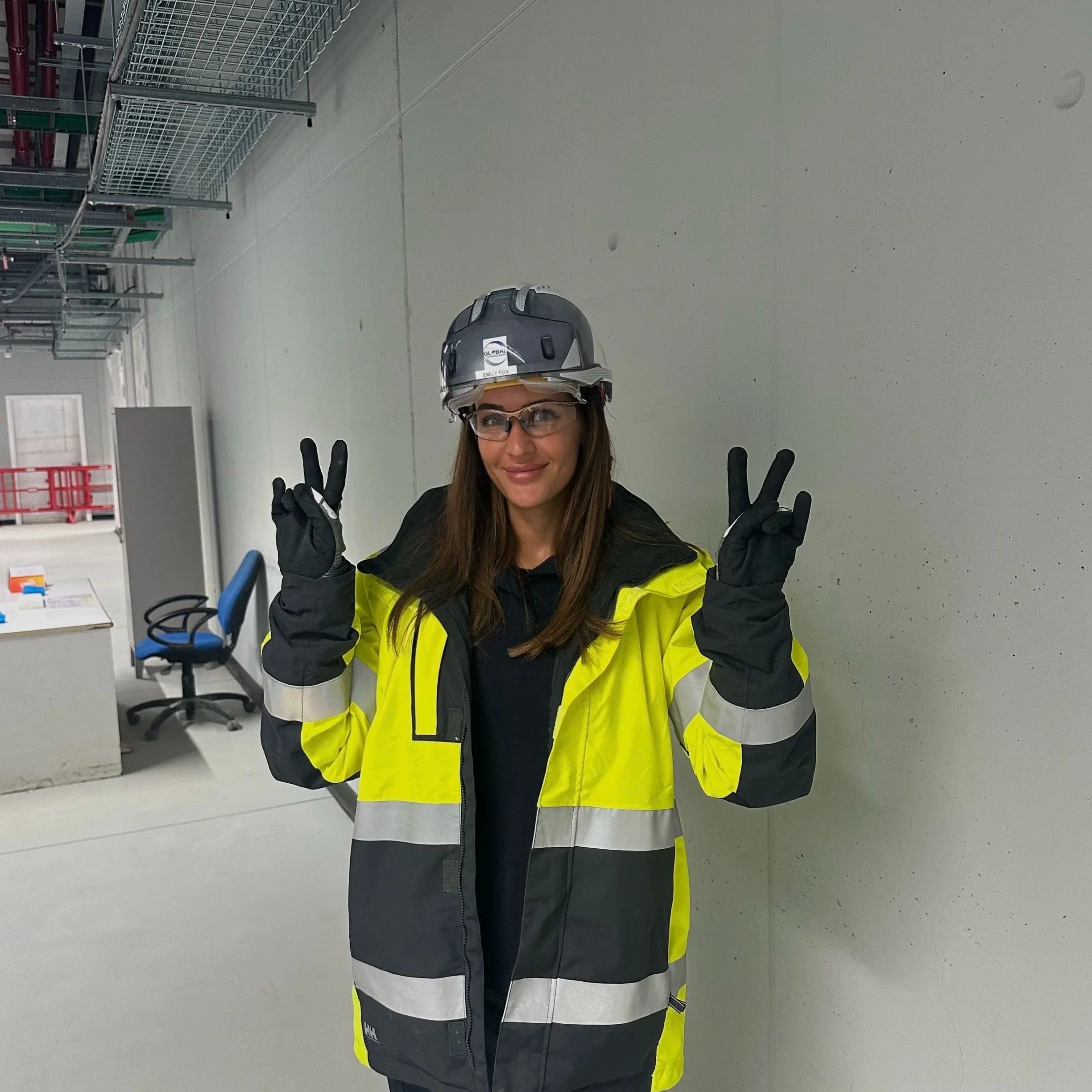
Melika, one of roughly ten women on a site of several hundred, is already looking ahead. "I want to take a leadership role - it's a five-year plan. I think it's really important to have women in senior positions, to show that it's possible and to change the way this industry sees itself."
Aleksandra puts it with characteristic directness: "We are tough, we are hardworking, and we want to be here. It's empowering to see how many of us are on sites now. It's not as many as it should be, but it is growing."
And Kelly, who has spent her career opening doors and telling people to walk through them, gets the last word.
"I've had impostor syndrome over the years - god, have I - but I've got to a point now where I think, no, I do believe in myself and I know I can do it. Never let anyone take that away from you. Go out there, go get it."
Seven women. Seven separate conversations. One consistent message.
The industry doesn't just need more women. It needs to value what women bring. And it needs to build the kind of environments where that difference can actually make a tangible difference.